The cold in Farmington, Maine is not discussed as weather.
It is felt as physical weight. A pressure that leans against glass until the putty gives. It does not chill skin. It interrogates bone.
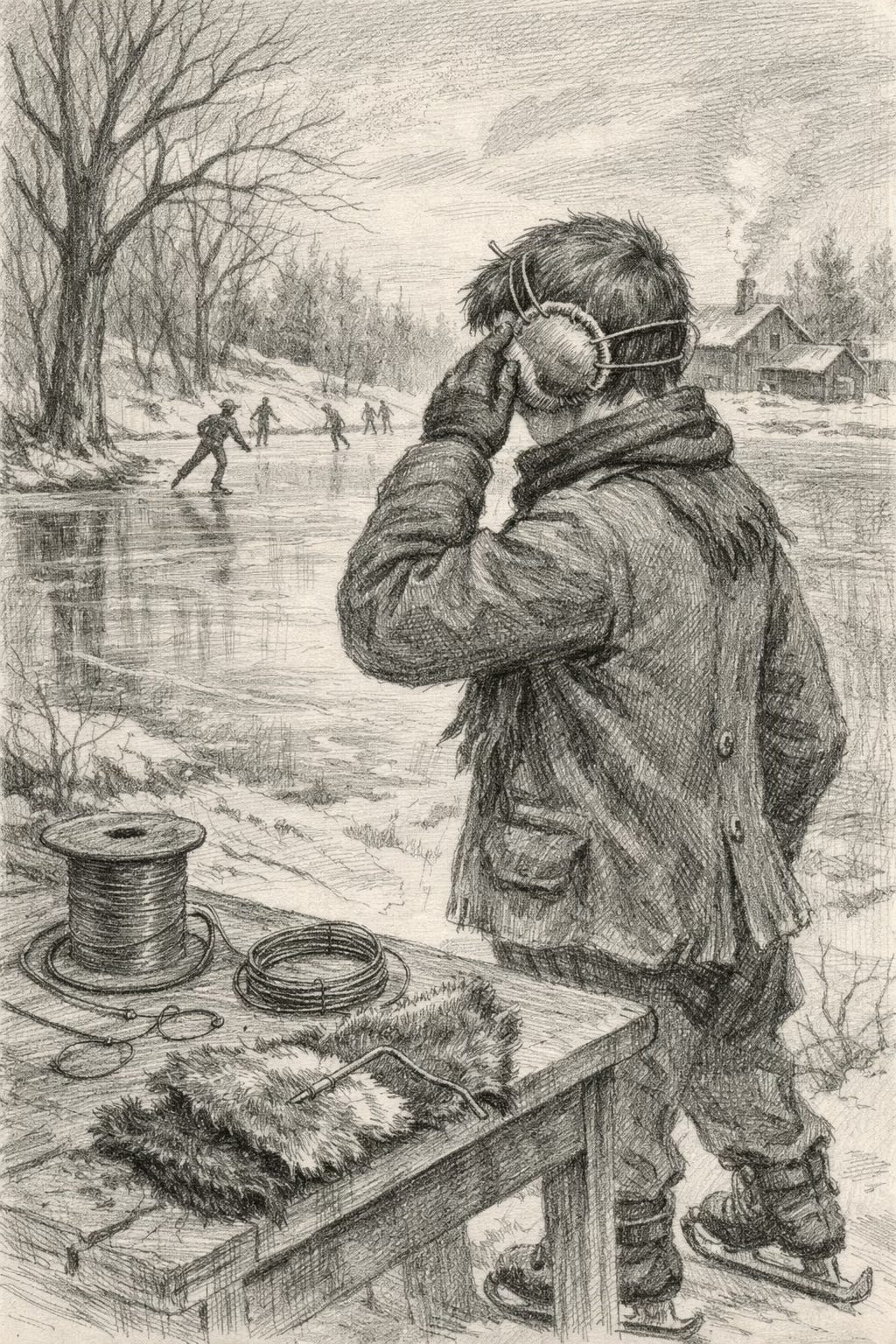
I was fifteen the winter of 1873. Fifteen is a difficult age to be anything; but it is an especially vulnerable age to be a lad with cold-sensitive ears and a hunger to skate across the Sandy River or Pease Pond.
The pond was a sheet of gray slate. The wind whipped through barren oaks and tall pines with a thin, high pitch. I wanted velocity. The clean speed of a fast skate. But my body rebelled. My ears turned first the color of chalk, then the violent red that precedes pain.
I tied a wool scarf, tight as a bandage. It slipped. It itched. It failed. I nearly tripped over it. The very motion I sought defeated my solution.
There is a particular frustration that belongs to the young: The moment you realize your world, as currently arranged, is insufficient. We suffer not because the world is cruel, but because we have not learned to look at it clearly, look at it long enough, nor look at it as it is.
I went home.
I sat at the kitchen table and watched my grandmother move through the small rituals of the day. Her body shaped by years of repetitive labor. She asked what was wrong. I told her.
She said, write the problem down. Then make it shorter. Then make it clearer. Then make it true. Odd. But I did.
I wrote. Scratched it out. Wrote again. Sat longer. Wrote once more.
Then I said, Grandma, I need help sewing.
She smiled.
I asked for wire. I asked for beaver fur. I was building an idea. A way around the wind without the bulk of a scarf.
I bent the farm wire into loops the size of silver dollars and watched her arthritic, fingers stitch fur onto metal.
It was crude. A primitive geometry of wire and pelt. But when I returned to the pond, the cold stayed off my ears.
The problem had been identified. Isolated. Solved.
We do not shape things we build; things we build, in time, shape us.
I did not imagine years ahead: Factories. Struggle. Logistics. Jobs gained and lost. I just stood at the pond’s edge, the wire warm in my hands, the fur smelling faintly of animal and smoke, and felt only this: The cold lost.
Later, people would speak of luck. Of beginnings. Of men who rise as if unseen hands lifted them. But nothing rose that afternoon. Something small simply stopped hurting. One corner of our world got better.
And I walked away with a steady sense that if a thing could be made better, it was a kind of disobedience to leave it unimproved.