Before breakfast, I was drafted into a revolution, which is never how serious political change should begin.
It was January 1683, though the day did not feel formal or worthy of ink. It felt cold. Wet. With the smell of last night’s rum still inside everyone’s mouths. It felt like the kind of morning when chickens consider staying cooped up.
Mr. Edward Gove woke us anyway.
He shook me by the shoulder. “Fetch your Trumpet.”
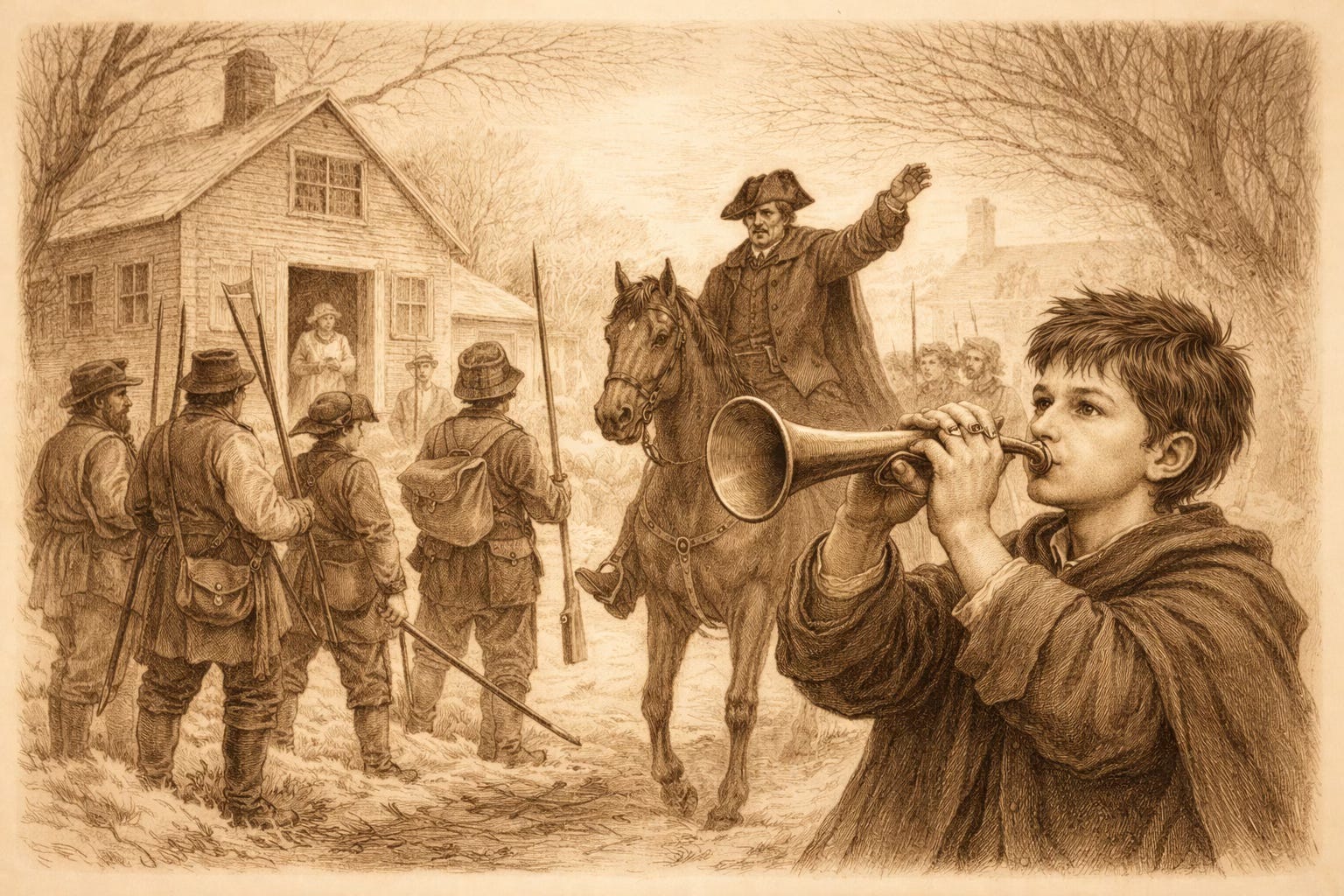
He meant the horn. He called it a trumpet the way men call a pig a stallion once it starts winning prizes. It was brass. It was dented. The mouthpiece had been worn so thin, you’d bite your lip if not careful. It had belonged to a soldier once. Then to a boy. Then to whoever could create noise. I was not the best at it, but I was better than the rest of Hampton, which in a place like New Hampshire qualifies you as a professional musician.
“Blow when I tell you,” Mr. Gove said.
He was already dressed as if he expected to become a statue. A good coat. A hat with the brim turned heavenward. He was sober enough to be dangerous. Full enough of self to believe the future was waiting on him.
There are men who get angry when rum flows. There are men who get sentimental. Mr. Gove got historical.
Most uprisings begin with injustice. Sometimes they begin with a man who has mistaken his mood for a mandate.
He began with the governor.
He continued with taxes.
He then explained, at some length and with several gestures: How a man could be ruled and how he should not be ruled. He said the Town Council was now dissolved. He said the old ways were broken. He said the governor treated the town like a plank he could nail.
He said “tyranny.” And waited for applause.
A few nodded.
Mostly it landed on people blinking back: Amused, tired, or both. A musket leaned against a bench, innocent as a broom. Another one, a Turkey gun, had no flint. Someone carried powder in a horn that looked like it had been licked clean by mice.
His son was there because he was his son.
His servant was there because servants always are.
A cooper named Briggs came because he thought “rising up” meant there would be cider. A man called Moses joined because he misunderstood and thought we were building something. Another because he disliked the governor, though he could not have named him.
A man at the back asked, “Will there be breakfast?”
Mr. Gove pretended not to hear.
Men will tolerate almost anything in silence, but they are cautious about clapping. Applause is a form of consent, and consent requires breakfast.